
guideNFT Collection
Deploy Your Own NFT Collection on 14 Chains in 60 Seconds — ZNS Connect's New Creation Tools
5m read·Mar 9
85% of new airdrops now use AI-based Sybil detection. The era of copy-paste wallet farming is over — here's what actually gets you qualified in 2026.

A 2026 machine learning study flagged 76% of ZKsync airdrop wallets as Sybil. Not 10%. Not 30%. Seventy-six percent.
That number didn't come from a blockchain analytics startup trying to sell a product. It came from a peer-reviewed paper analyzing on-chain behavioral patterns at scale. The methodology wasn't looking for obvious farms — it was catching the sophisticated ones. Wallets with real transaction histories, aged accounts, diversified interactions. Still flagged.
MANTRA launched "Sybil Slaying Season" as an explicit campaign against multi-wallet farmers. Base — potentially the largest airdrop in crypto history, with JPMorgan estimating a $12-34B fully diluted valuation — announced anti-Sybil detection as a core eligibility mechanism before a single token was distributed.
This isn't a trend. It's a structural shift in how airdrop eligibility works.
For years, the playbook was simple: spin up wallets, bridge funds, interact with the protocol, repeat. The more wallets, the more allocation. Projects knew it was happening and largely tolerated it because volume metrics looked good for investors and press.
That tolerance is gone.
The game has changed. Projects are no longer asking "did this wallet interact with us?" They're asking: "Is this a real person with a real onchain identity?"
If you can't answer yes to the second question, the first one doesn't matter.

onchain-identity-score-airdrop-wallet-reputation
Modern anti-Sybil systems don't just count transactions. They build a behavioral fingerprint of each wallet — a composite profile assembled from dozens of on-chain and off-chain signals, then fed into machine learning models trained on known Sybil patterns.
Here's what they're actually measuring:
ML models cross-reference hundreds of these signals simultaneously, building cluster maps of wallets that behave similarly. If your wallet shares behavioral DNA with 50 other wallets, all 50 get flagged — regardless of individual transaction count.
This is why the old defense of "my wallets have different histories" no longer works. The systems aren't looking at wallets in isolation. They're looking at the entire network graph.
A wallet with 200 transactions and no identity layer can be flagged. A wallet with 20 transactions, a Web3 domain, a profile, and genuine cross-chain history will pass.
The fundamental shift: from volume farming → identity building. The metric that matters is no longer how many times you interacted. It's how human your wallet looks to a machine.
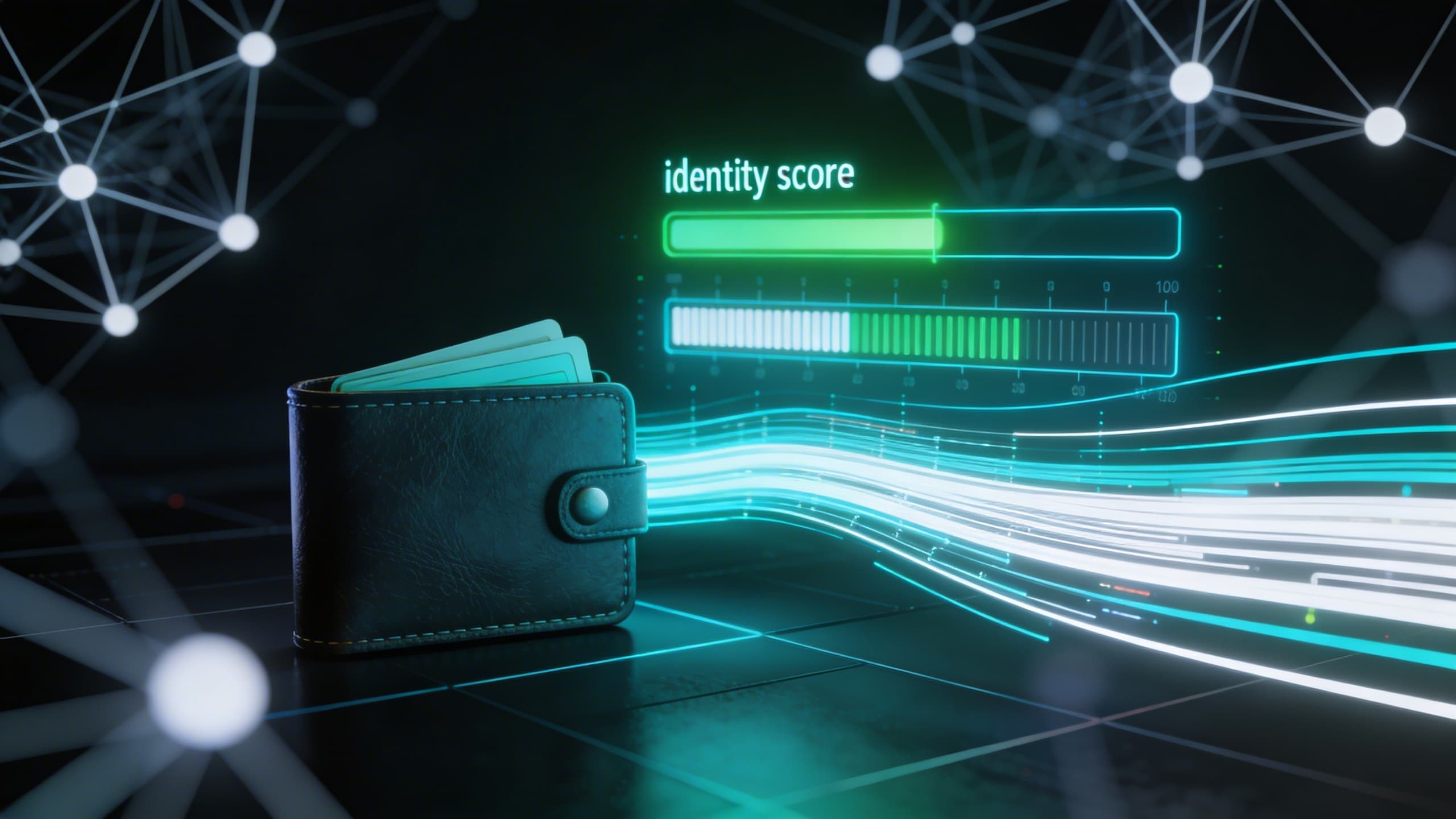
Onchain identity score and reputation system for airdrop qualification in Web3
Projects now reward wallets that look like users, not scripts. The good news: building a genuine wallet identity isn't complicated. It just requires consistency over time — and starting before the next major airdrop announcement, not after.
Here's what a strong wallet narrative actually includes:
1. Consistent onchain history Use multiple protocols genuinely over time — not just the target project. DeFi, NFTs, bridges, governance votes. The diversity of interaction matters more than the volume of any single action. Projects look for wallets that would exist even if there were no airdrop.
2. An identity layer A Web3 domain attached to your wallet signals permanence and commitment. It's something a real person registers once and keeps. Bots don't register domains — there's no ROI calculation that makes it worth farming. A domain is a human signal that automated detection can't replicate at scale.
3. A complete social profile A profile with links, a bio, and activity across platforms adds off-chain signal to your on-chain footprint. Galxe, Guild, and Soneium Score all factor social presence into their scoring. An empty profile attached to a wallet with 300 transactions is a red flag, not a green one.
4. Cross-chain footprint Active presence across multiple networks — not just the chain running the airdrop. Genuine users move between ecosystems. Farmers concentrate where the incentive is. The difference is visible in the data.
5. Time The hardest signal to fake is age. Wallets that have been active for 12+ months with consistent, varied behavior score significantly higher than wallets that appeared 30 days before an airdrop snapshot. Start building now, not when the announcement drops.
The wallets that will win the Base airdrop, the Monad airdrop, and every major 2026 distribution aren't the ones with the most transactions. They're the ones that look unmistakably human across every signal that matters.
Your Web3 domain is part of that proof. Register once. Use everywhere. Let it do the work.
Find your name across 90+ chains — no renewals, full profile.
Register your Web3 domain and build your onchain identity.