educationAI NANO Banana
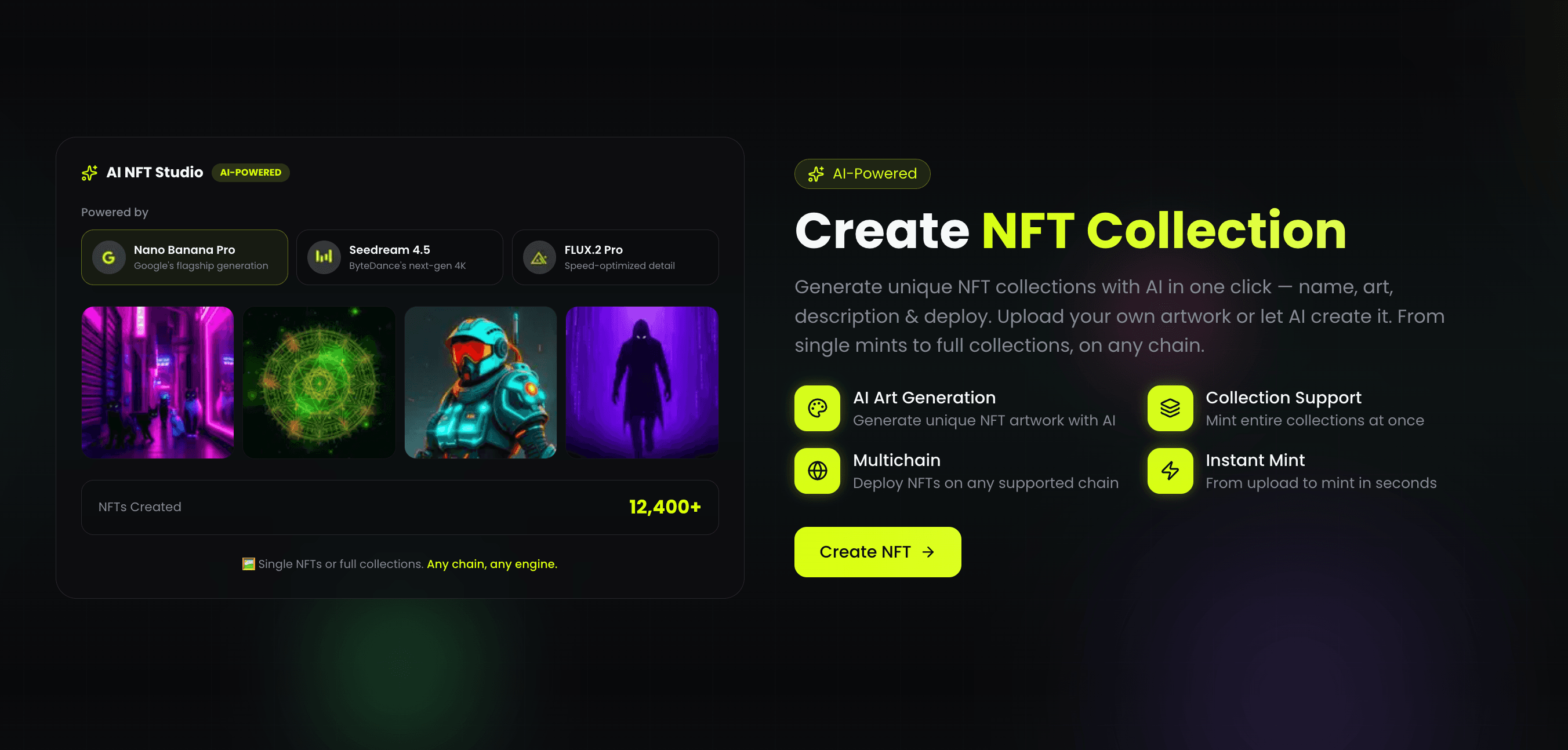
AI NFT Generator: Create and Deploy an NFT Collection With One Prompt — Powered by FLUX, Stable Diffusion, and Nano Banana
9m read·Mar 17
Nearly 1 in 4 adults now holds digital assets. But your wallet choice determines how much of that value you actually control — and how much you can do with it. Here are the 10 best crypto wallets in 2026, ranked by security, chain support, and real-world usability for active Web3 users.
A crypto wallet doesn't store your cryptocurrency. Your assets live on the blockchain. What a wallet stores are your private keys — the cryptographic proof of ownership that lets you sign transactions and access your funds. Lose the keys, lose the crypto. The wallet is the interface between you and everything you own on-chain.
In 2026, wallets have evolved well beyond simple key storage. The best options now include built-in token swaps, DeFi protocol access, NFT management, multi-chain support, staking, and security tooling that warns you before you sign a malicious transaction. Choosing the right wallet isn't just a security decision — it's a decision about what you can do in Web3.
This guide covers the 10 best cryptocurrency wallets in 2026 across both hot wallets (software, browser extensions, mobile apps) and cold wallets (hardware devices). Each is evaluated on security architecture, chain support, usability, and fit for active crypto users.
Nearly 820 million unique crypto wallet addresses were active in 2025. The question is no longer whether to use a wallet — it's which one fits how you actually use crypto.
Hot wallets are connected to the internet. They run as browser extensions, mobile apps, or desktop software. They're fast, convenient, and essential for daily DeFi activity, NFT minting, airdrop farming, and any protocol interaction requiring a live wallet connection. The trade-off: being online means exposure to phishing, malware, and smart contract exploits. Over $1.1 billion was lost to hot wallet exploits in 2025.
Cold wallets store private keys offline on a physical device. They're the gold standard for long-term holdings — immune to remote attacks by design. The trade-off: less convenient for daily transactions, require physical confirmation for every signing.
The right setup for most active crypto users in 2026: a hot wallet for daily activity and a hardware wallet for significant long-term holdings. Both categories are covered below.
Type: Browser extension + mobile | Chains: 100+ EVM networks | Free
Rabby is the wallet built for users who interact with DeFi protocols and multi-chain ecosystems daily. What separates it from MetaMask is its security layer: Rabby automatically simulates every transaction before you sign it, showing exactly what will happen to your assets. It also flags risky approvals, identifies phishing contracts, and automatically switches to the correct network based on the dApp you're using — no manual chain switching.
For airdrop farmers operating across 20+ networks simultaneously, Rabby's automatic chain detection alone saves significant friction. The wallet supports all EVM-compatible chains and displays a unified portfolio view across all of them.
Best for: Active DeFi users, airdrop farmers, anyone managing wallets across many EVM chains simultaneously.
Where to get it: rabby.io
Type: Browser extension + mobile | Chains: All EVM chains | Free
MetaMask is the default Web3 wallet — over 100 million users and supported by virtually every dApp, protocol, and chain in the EVM ecosystem. Its universal compatibility is its primary advantage. If a platform supports one wallet, it supports MetaMask.
In 2026, MetaMask has added built-in scam detection (Blockaid), human-readable transaction warnings, and a Snaps plugin system that extends functionality to non-EVM chains through community-built extensions. It's not the most advanced security tool, but its ecosystem coverage is unmatched.
Best for: Users who need compatibility above all else, beginners entering Web3 for the first time.
Where to get it: metamask.io
Type: Browser extension + mobile | Chains: Solana, Ethereum, Polygon, Base | Free
Phantom started as the dominant Solana wallet and has since expanded to support Ethereum-compatible chains. It's known for its clean UX, strong NFT management, and deep Solana DeFi integrations. The wallet includes built-in security warnings, token burning for spam NFTs, and a hardware wallet connection for cold-storage signing.
For users active across both Solana and EVM ecosystems, Phantom offers a unified experience that avoids maintaining separate wallets for each. Its Solana support is unmatched — Solana DEXs, NFT marketplaces, and protocols all integrate natively.
Best for: Solana-first users, NFT collectors operating across Solana and EVM, multi-ecosystem active traders.
Where to get it: phantom.com
Type: Mobile + browser extension | Chains: 100+ blockchains, 10M+ assets | Free
Trust Wallet supports more assets across more chains than any other hot wallet — over 10 million tokens across 100+ blockchains including Bitcoin, Ethereum, Solana, BNB Chain, and all major EVM networks. It includes built-in staking, a Web3 browser, NFT storage, and a Security Scanner that checks wallet addresses and contracts before interaction.
Originally built in 2017 and acquired by Binance in 2018, Trust Wallet has maintained self-custodial architecture — your keys stay on your device. Its main limitation: it doesn't offer two-factor authentication, and its Binance association is a consideration for users who prefer fully independent wallets.
Best for: Users who need to manage assets across many different blockchain ecosystems from a single interface.
Where to get it: trustwallet.com
Type: Desktop + mobile + browser extension | Chains: 50+ networks | Free
Exodus is the most polished beginner-friendly wallet available across all platforms — Windows, macOS, Linux, iOS, Android, and browser. The interface is clean and consistent everywhere. Built-in swaps, in-app staking for Cardano, Solana, Cosmos, and other assets, and real-time portfolio tracking make it a comprehensive tool for users who want everything in one place without needing to understand the underlying complexity.
Exodus is closed-source, which some security-conscious users consider a drawback. It also launched Exodus Pay in late 2025 for stablecoin spending. Hardware wallet integration available with Trezor on desktop.
Best for: Beginners who want an all-in-one wallet with clean design, desktop users, and users who value built-in swap and staking over raw technical control.
Where to get it: exodus.com
Type: Mobile only | Chains: Major chains including ETH, BTC, Solana | Free
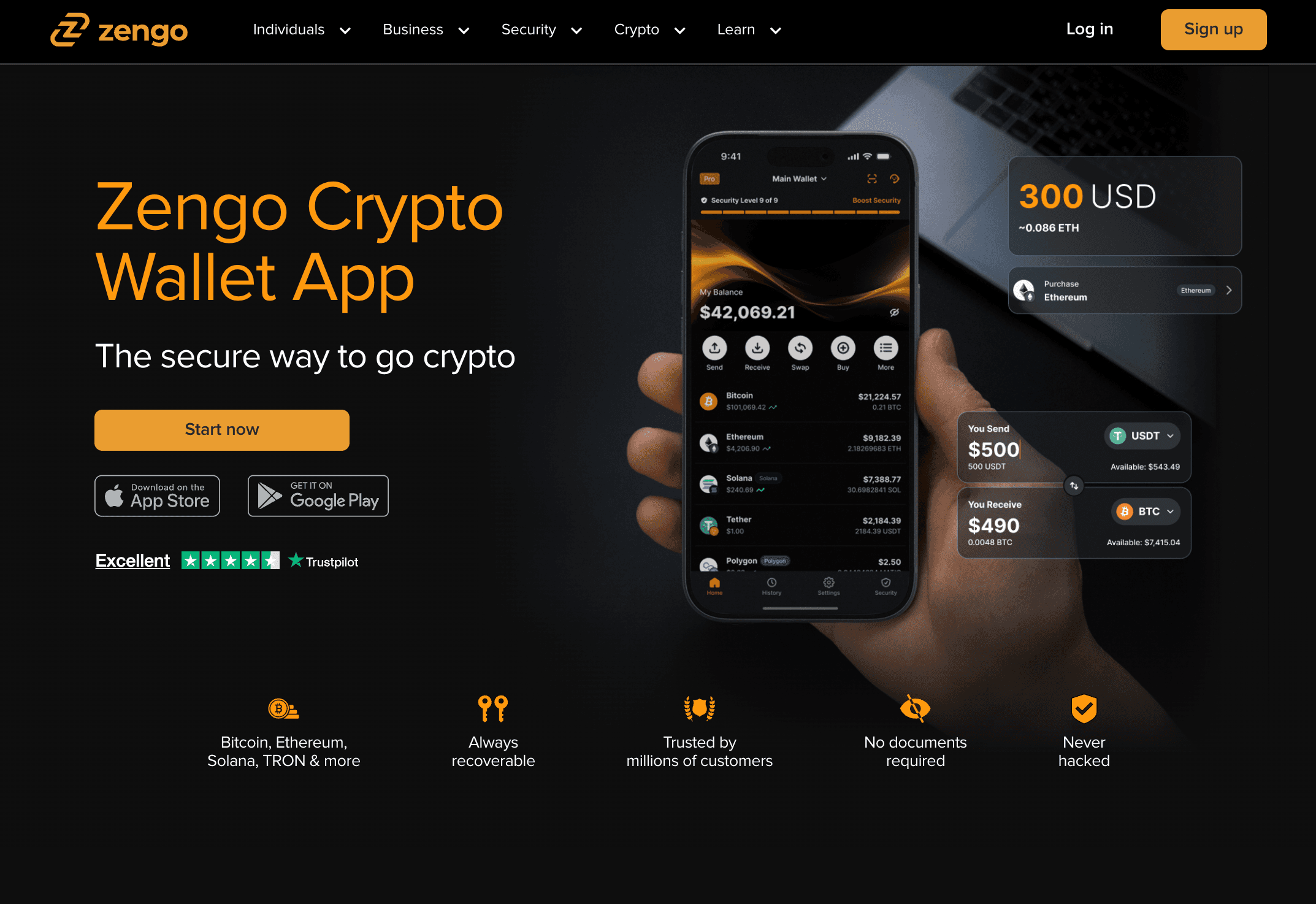
ZenGo replaces the traditional seed phrase with multi-party computation (MPC) — splitting the private key into two mathematical shares, one held by you and one on ZenGo's server. Neither share is sufficient to access funds alone. This means losing your device doesn't mean losing your crypto — a significant improvement over traditional wallet recovery.
The trade-off: MPC architecture means you're partially dependent on ZenGo's infrastructure, and the wallet is mobile-only with fewer supported chains than multi-chain competitors. For users who are worried about seed phrase management, ZenGo solves the most common cause of crypto loss.
Best for: Non-technical users who prioritize recovery safety over maximum chain breadth.
Where to get it: zengo.com
Type: Hardware (cold wallet) | Chains: 5,500+ via Ledger Live | Price: ~$249**
The Ledger Nano Flex is Ledger's current flagship hardware wallet, featuring a large E Ink touchscreen, NFC pairing for seamless mobile connection, and Bluetooth connectivity. The CC EAL6+ secure element keeps private keys isolated from all external systems. Every transaction is reviewed and signed directly on the device — malware on your computer or phone cannot forge a signature without physical confirmation.
Ledger Live supports over 5,500 cryptocurrencies and integrates with DeFi protocols, staking services, and NFT management. The Nano Flex's portability and NFC capability make it significantly more practical for daily use than older hardware wallet designs.
The main ongoing criticism: Ledger's firmware is not fully open-source, which is a legitimate consideration for users who want complete auditability.
Best for: Long-term holders wanting a practical daily-use hardware wallet, users with significant holdings across many chains.
Where to get it: ledger.com
Type: Hardware (cold wallet) | Chains: 9,000+ | Price: $169**
Trezor is the benchmark for fully open-source hardware wallet security. The Safe 5, released in 2025, adds a haptic touchscreen and a Gorilla Glass 3 protected interface to Trezor's existing security architecture. All firmware is open-source and auditable — no closed NDAs, no hidden components. The EAL6+ dedicated secure element handles key storage.
Trezor Suite was updated in early 2026 with Avalanche C-Chain support, an ADA staking dashboard, and a redesigned swap interface. For users who prioritize open-source verification above everything else, Trezor Safe 5 is the clear choice. The Safe 7 adds Bluetooth and Qi2 wireless charging for users who need wireless connectivity.
Best for: Security-first users who want fully auditable, open-source hardware wallet firmware.
Where to get it: trezor.io
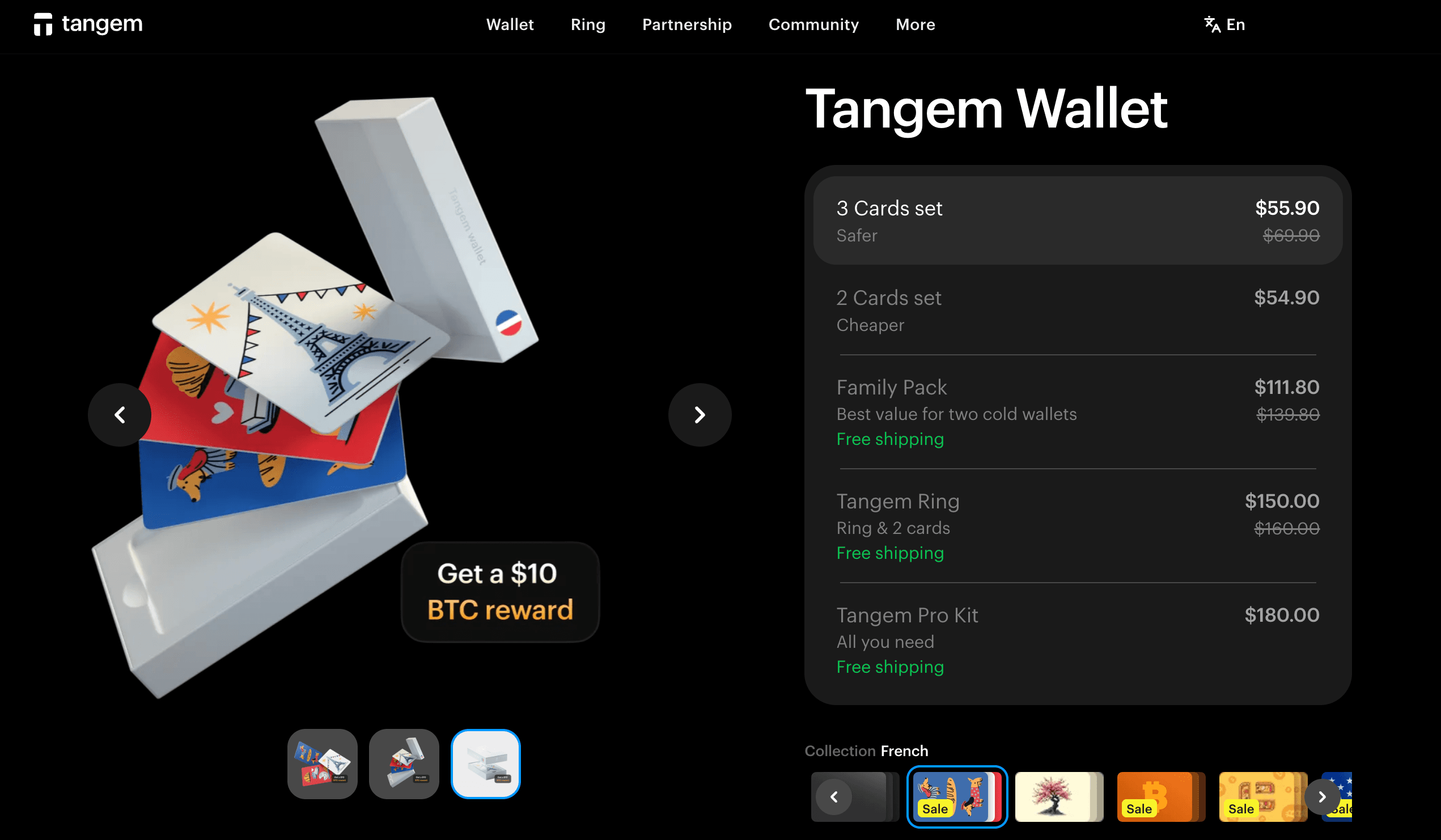
Type: Hardware (NFC card) | Chains: 16,000+ | Price: From $54.90**
Tangem takes a completely different approach to hardware wallet design: instead of a device with a screen, it's an NFC smartcard — similar in size to a credit card. The private key is generated and stored directly on the card's chip and never leaves it. There's no seed phrase to back up or lose. Recovery uses physical backup cards instead.
You manage Tangem through its mobile app via NFC tap. The combination of cold-storage-level security with smartphone-level convenience makes it uniquely accessible. Supports over 16,000 cryptocurrencies across all major chains. The limitation: no desktop support, requires an NFC-enabled smartphone.
Best for: Users who want hardware wallet security without managing seed phrases, mobile-first users.
Where to get it: tangem.com
Type: Mobile + browser extension | Chains: 10+ major chains | Free
Coinbase Wallet is the self-custodial companion to the Coinbase exchange — but operates completely independently. You don't need a Coinbase account to use it. It supports Ethereum and all major EVM chains, Bitcoin, Solana, and Coinbase's own Base L2. The interface is clean, beginner-friendly, and deeply integrated with Base ecosystem apps.
With 15 million+ installs and the trust of the Coinbase brand behind it, Coinbase Wallet is the most accessible path to self-custody for users coming from a centralized exchange. Its chain support is narrower than Trust Wallet or Rabby, and some users prefer wallets with no CEX association.
Best for: Users transitioning from Coinbase exchange to self-custody, Base ecosystem users.
Where to get it: wallet.coinbase.com
| Wallet | Type | Chains | Best For | Price |
|---|---|---|---|---|
| Rabby | Hot — Browser/Mobile | 100+ EVM | DeFi farming, multi-chain | Free |
| MetaMask | Hot — Browser/Mobile | All EVM | Universal compatibility | Free |
| Phantom | Hot — Browser/Mobile | Solana + EVM | Solana + multi-ecosystem | Free |
| Trust Wallet | Hot — Mobile/Browser | 100+ | Asset breadth, mobile | Free |
| Exodus | Hot — Desktop/Mobile | 50+ | Beginners, clean UX | Free |
| ZenGo | Hot — Mobile | Major chains | No seed phrase recovery | Free |
| Ledger Nano Flex | Cold — Hardware | 5,500+ | Daily-use hardware | ~$249 |
| Trezor Safe 5 | Cold — Hardware | 9,000+ | Open-source security | $169 |
| Tangem | Cold — NFC Card | 16,000+ | No seed phrase hardware | From $54.90 |
| Coinbase Wallet | Hot — Mobile/Browser | 10+ major | Self-custody beginners | Free |
A wallet secures your keys and signs transactions. What it doesn't do is build your on-chain identity, maintain your activity history, or position your wallet for airdrop eligibility across 90+ networks.
That's what ZNS Connect adds on top of any wallet. Register a Web3 domain that resolves your address across 90+ chains. Send daily GM/GN transactions across all target networks with one click via the 7-in-1 workflow. Deploy NFT collections and smart contracts to build a multi-signal on-chain profile. Track active airdrop opportunities at zns.bio/airdrops.
Your wallet is the foundation. Your on-chain activity — consistent, multi-chain, verified by a domain tied to your address — is what determines which snapshots you qualify for.
Use Rabby or MetaMask for daily transactions. Use Ledger or Trezor for long-term storage. Use ZNS Connect to make sure those wallets are working as hard as possible.
Find your name across 90+ chains — no renewals, full profile.
Register your Web3 domain and build your onchain identity.