
analysisHardware Wallets
Trezor Safe 7 Review 2026: The First Quantum-Ready Hardware Wallet With Dual Secure Elements
8m read·Mar 30
Points systems are how protocols reward early users before a token exists. Accumulate points now, convert to tokens at TGE. In 2026, nearly every major protocol launch starts with a points phase — and the farmers who understood the rules early walked away with the largest allocations. Here's exactly how it works.
A points system is a pre-token loyalty program. A protocol wants to reward early users but hasn't launched a token yet — either because the token isn't ready, the regulatory environment requires delay, or the team wants to build genuine usage data before locking in token distribution percentages.
The solution: assign points to user actions. Bridge to our chain — earn 100 points. Swap on our DEX — earn 50 points per $100 volume. Maintain a daily streak — earn 10 points per day. Refer a friend — earn 500 points.
Points accumulate in a user's account. At some future date — usually at Token Generation Event (TGE) — points convert to tokens at a defined or algorithmically-determined ratio. Early users who accumulated the most points receive the largest token allocations.
This mechanism benefits both sides. The protocol gets real usage, real TVL, and real behavioral data before committing to a token distribution model. The user gets a clear signal: this protocol will have a token, your activity now will be rewarded, and the conversion ratio will likely favor early participants over late ones.
By 2026, the points phase has become standard for every serious protocol launch. If a protocol has significant backing, is building genuine infrastructure, and has no token yet — there is almost certainly a points system running, whether publicly announced or quietly tracking user behavior on-chain.
Points are not a promise. They are a claim on a future allocation that hasn't been defined yet. The protocols that honor this claim generously are the ones with reputations worth protecting. Farm accordingly.
Points systems vary in structure but share the same core mechanics. Understanding each component tells you where to focus effort and where the highest-leverage actions are.
Base activity points The foundation of every system. Every qualifying action earns a defined number of points: transactions, swaps, deposits, bridges, mints. The rate is usually disclosed in the protocol's documentation or discoverable by observation — make an action and watch your points counter.
Key insight: protocols almost always weight higher-intent actions more heavily. Deploying a smart contract earns more points than sending a GM. Providing liquidity earns more than swapping. The highest base-activity points come from actions that require commitment — locking funds, deploying contracts, creating content.
Multipliers Most sophisticated points systems include multipliers that amplify base points:
The multiplier stack is where sophisticated farmers separate themselves. A farmer with a 3x time multiplier, 2x streak multiplier, and 1.5x volume multiplier earns 9x the base points of a farmer who started late, skips days, and uses minimum transaction sizes. Same number of actions. Completely different allocation.
Point decay and expiry Some systems include mechanics that reduce points over time for inactive wallets or redistribute points from inactive to active users. Always check whether the system you're farming has decay mechanics — inactivity can cost you accumulated points, not just future earnings.
Snapshot vs rolling conversion Two conversion models exist. Snapshot systems take a single point-in-time record of all user balances and convert based on that moment — meaning a last-minute push can improve your position. Rolling conversion systems average your points over time, making early accumulation more important and late pushes less effective. The Eigenlayer points model is a well-known example of rolling conversion; Blur's season system used snapshot mechanics.
The leaderboard dynamic Most points systems are relative, not absolute. Your token allocation depends not on your raw points total but on your share of total points issued. If 1 billion points exist and you have 1 million, you get 0.1% of the points-eligible allocation. This means the strategy isn't "earn as many points as possible" — it's "earn more points than the median farmer as efficiently as possible."
Step 1: Identify systems before they're announced
The best time to enter a points system is before it's publicly known. By the time a points program is announced on Twitter and covered by CryptoRank, the time multiplier has already started working against you.
Early identification signals: protocol has raised significant funding but has no token, has launched mainnet but no airdrop, has growing TVL with no reward mechanism visible. These wallets are almost always tracking on-chain behavior silently — even without a visible points counter, your activity may already be scored.
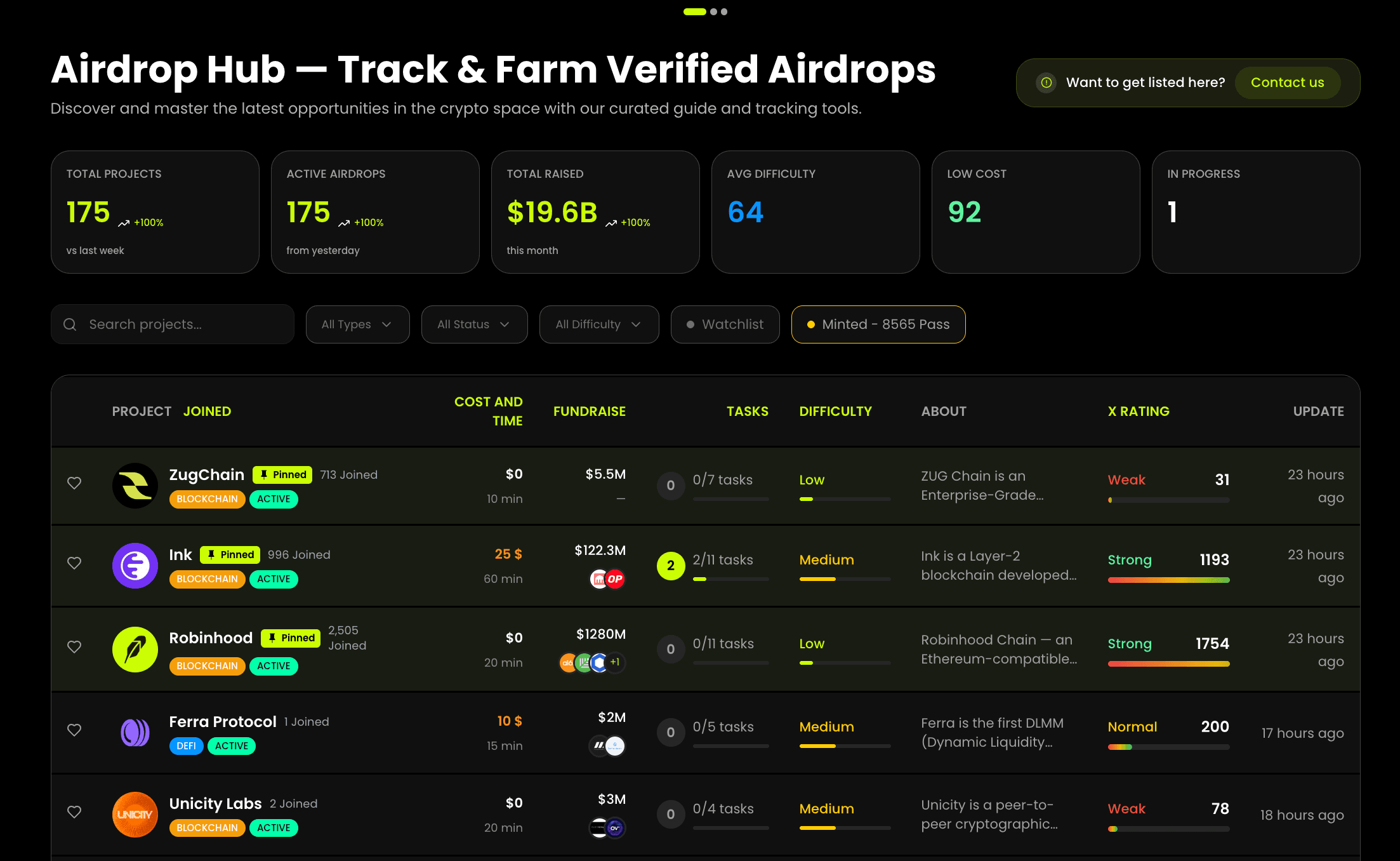
The ZNS Airdrops page at zns.bio/airdrops lists ~200 projects including pre-token protocols where farming is active. Filter for "No Token Yet" status — these are the highest-priority targets for points accumulation.
Step 2: Activate the streak multiplier immediately
The streak multiplier is the single highest-leverage component of any points system because it compounds daily and is impossible to fake retroactively. Start your streak on day one, protect it every day.
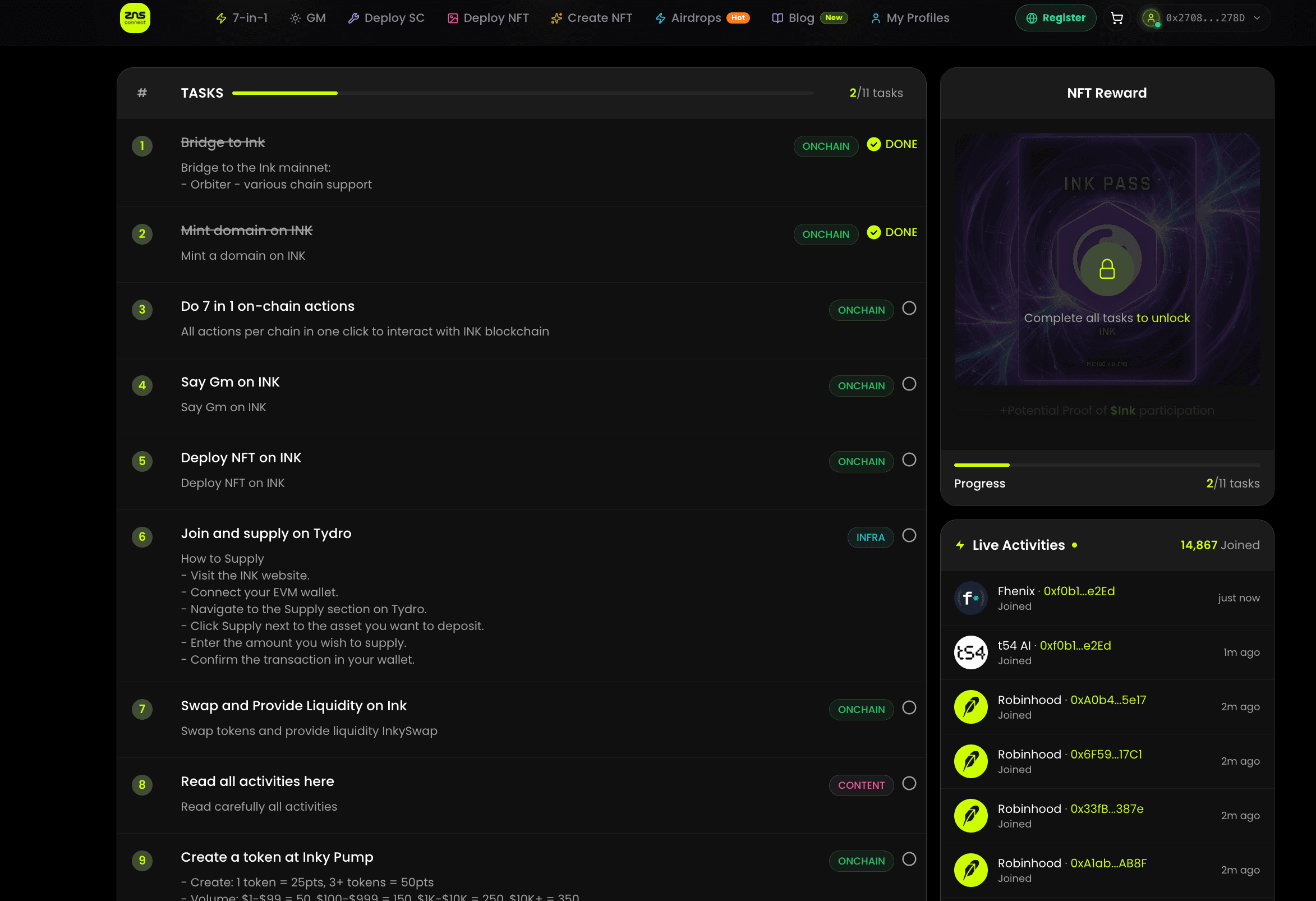
The practical setup: run ZNS Connect's 7-in-1 workflow at zns.bio/gm-deploy?tab=7in1 every day on the chains you're farming. This produces daily transaction records across multiple chains simultaneously — satisfying streak requirements for any protocol active on those networks.
Step 3: Concentrate volume on multiplier-eligible actions
Identify which actions carry the highest points-per-dollar in each system. Usually: liquidity provision > swap volume > bridge volume > simple transactions. Concentrate your capital on the highest-multiplier actions rather than spreading thin across everything.
For protocols that weight contract deployment or identity registration: use ZNS Connect to deploy contracts at zns.bio/gm-deploy?tab=deploy and register domains at zns.bio before any other activity. These are one-time actions that permanently improve your points profile.
Step 4: Activate referrals early
Referral multipliers are permanent passive income within a points system. Every user you refer contributes to your points total indefinitely. The earlier you activate this, the longer it compounds.
Step 5: Track conversion signals and position for TGE
Watch for three signals that TGE is approaching: protocol announces token details, points system is officially closed to new entrants, or a snapshot date is mentioned. In the 2–4 weeks before TGE, some systems allow last-minute point accumulation to push your percentile position. Others freeze multipliers. Know which model you're farming.
Points system red flags — when to stop farming:
None of these guarantee a bad outcome, but each raises the risk that the points you accumulated won't convert as expected.
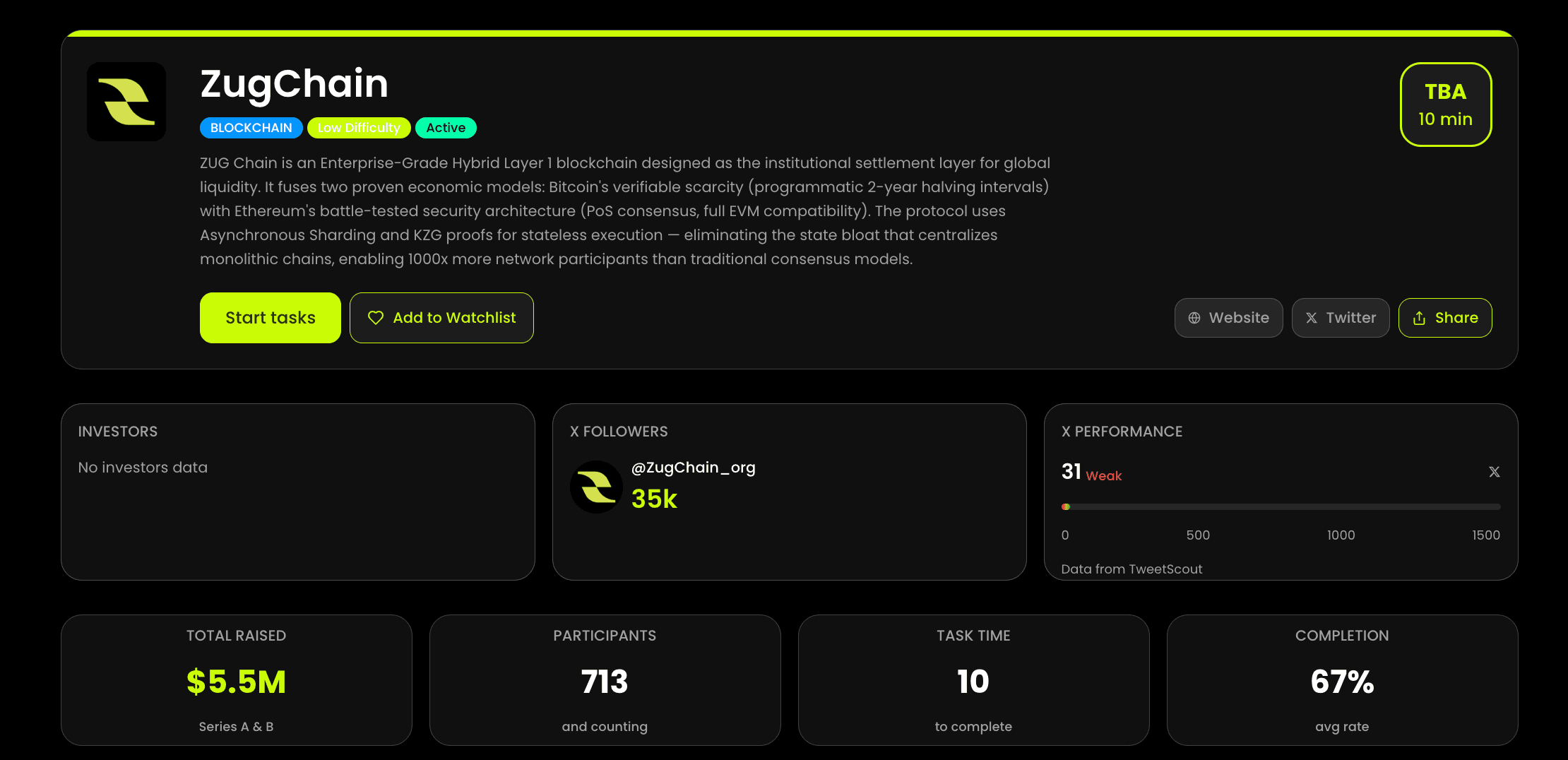
The strongest points farming opportunities share three characteristics: significant funding (Series A or higher, or major protocol backing), real mainnet activity with growing TVL, and no token yet. These conditions together create the highest probability of a meaningful points-to-token conversion.
The full list of current opportunities — filtered, curated, and updated as new projects launch — is at zns.bio/airdrops. Filter by "No Token" status for the active points farming targets.
Before farming any points system — the setup checklist:
The farmers who consistently extract the most value from points systems are not the ones who farm the most protocols. They're the ones who farm fewer protocols more deeply, enter earlier, protect their streak multiplier, and understand the conversion mechanics before committing time.
Points convert once. The preparation happens before that moment — not after.
Find your name across 90+ chains — no renewals, full profile.
Register your Web3 domain and build your onchain identity.