
analysisHardware Wallets
Trezor Safe 7 Review 2026: The First Quantum-Ready Hardware Wallet With Dual Secure Elements
8m read·Mar 30
Most people think making money with crypto means buying low and selling high. In 2026, the most consistent returns come from a different playbook entirely — airdrops, DeFi yields, and on-chain activity that protocols reward directly. Here's the honest breakdown of every method that works, what each requires, and where to start.

There are two ways people lose money in crypto. The first is obvious: they buy a token at the top and sell at the bottom. The second is less visible: they sit in stablecoins or idle assets waiting for "the right moment" while protocols are actively distributing tokens to anyone willing to show up and do something on-chain.
The traders who rely purely on price speculation face a brutal reality: in any given year, the majority of retail traders underperform simply holding Bitcoin. The market is faster, more automated, and more sophisticated than it was in 2017 or 2020. Edge in pure trading requires institutional infrastructure most retail participants don't have.
But making money with crypto in 2026 is not limited to trading. There are four methods that produce consistent returns for users who aren't running quant strategies — and three of them require no market prediction at all.
Method 1: Airdrop farming — protocols distribute free tokens to active users. No capital required beyond gas fees.
Method 2: DeFi yield — earn interest on assets you already hold through lending and liquidity provision.
Method 3: On-chain activity rewards — points systems, streak rewards, and protocol incentives that convert to tokens at TGE.
Method 4: Staking — earn protocol emissions by locking tokens to secure networks.
Each method has different risk profiles, time requirements, and capital requirements. Understanding all four — and which combination fits your situation — is more valuable than any price prediction.
The biggest transfers of wealth in crypto don't happen when prices move. They happen when protocols distribute tokens to early users who showed up consistently while everyone else was waiting for the bull market.
Airdrops are token distributions by protocols to wallet addresses that meet specific eligibility criteria. The criteria vary — transaction count, protocol interactions, identity signals, chain activity — but the common thread is that the wallet must have done something real on the protocol's network before the snapshot.
What it requires:
What it doesn't require:
What the returns look like:
The range is enormous. Small airdrops distribute $50–200 worth of tokens. Mid-tier distributions (zkSync, Scroll) delivered $500–3,000 to consistently active wallets. Top-tier historical airdrops (Arbitrum, Uniswap, ENS) delivered $1,000–15,000+ to qualifying addresses.
The key variable is not luck — it's how many eligible wallets you're running, how consistently you've been active, and how early you started on each network.
How to start:
The full list of active farming opportunities — ~200 projects, filtered by funding, status, and farming guide — is at zns.bio/airdrops. Each listing includes what actions qualify, how to complete them, and estimated value.
For the daily activity habit that builds eligibility across all targets simultaneously: zns.bio/gm-deploy?tab=7in1 — seven on-chain actions per chain, one click, five minutes per day.
DeFi (decentralized finance) protocols let you earn yield on crypto assets through three main mechanisms: lending, liquidity provision, and yield farming.
Lending
Deposit assets into lending protocols (Aave, Compound, Morpho) and earn interest from borrowers. Current rates on stablecoins: 4–12% APY depending on protocol and market conditions. Rates on ETH: 2–5% APY. Risk: smart contract risk (protocol gets hacked) and liquidation risk if you're borrowing against your deposits.
Liquidity provision
Deposit two assets into a DEX liquidity pool (Uniswap, Curve, Velodrome) and earn a share of trading fees. Fee income depends on trading volume through your pool. Risk: impermanent loss — if the price ratio between your two assets changes significantly, you may end up with less value than simply holding. Stable/stable pairs (USDC/USDT) minimize this risk.
Yield farming
Protocols incentivize liquidity by rewarding liquidity providers with additional tokens on top of fee income. Total APY can reach 20–100%+ during incentive campaigns — but these rates are temporary and often reflect high-risk or new protocols.
The realistic expectation:
Conservative DeFi yield on established protocols: 4–15% APY on stablecoins, 2–8% on ETH. This beats traditional savings accounts significantly with manageable risk on audited, established protocols. Aggressive yield farming on newer protocols: 20–150%+ APY with proportionally higher risk.
Where to track DeFi opportunities:
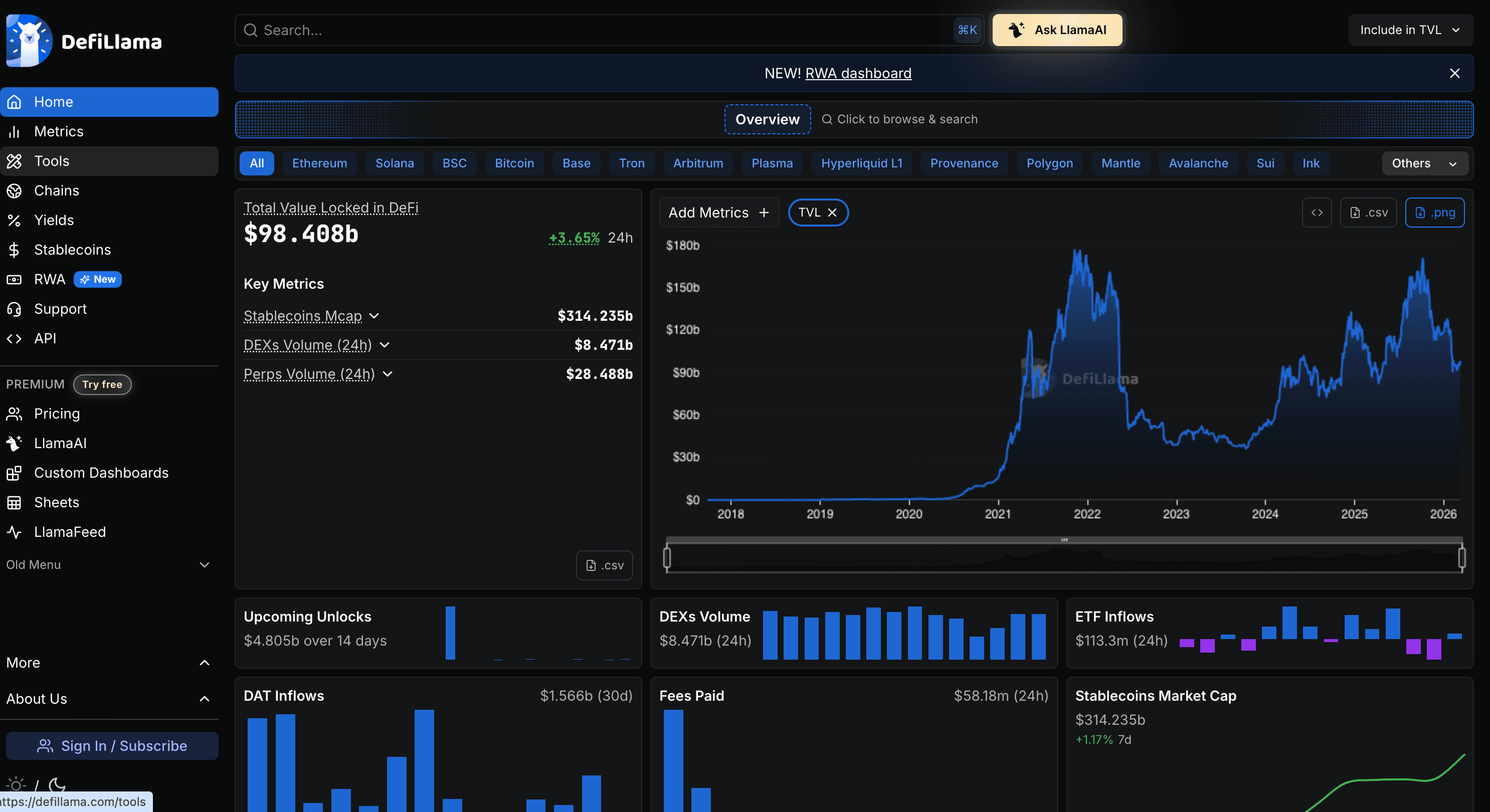
DefiLlama shows current yields across all protocols and chains. Filter by chain, asset type, and protocol age to find the risk/reward profile that fits your situation.
This is the method most people overlook because the reward is invisible until TGE. Dozens of protocols in 2026 are running active points systems — tracking user behavior silently and accumulating points that will convert to tokens at launch.
How it works:
Every qualifying action earns points. Points accumulate. At TGE, points convert to token allocations. Early participants with streak multipliers earn disproportionately more than late participants with identical raw activity.
A user who starts farming a pre-token protocol in month one with a daily streak earns potentially 5–10x the points of a user who starts in month four — even if the month-four user makes more individual transactions. The time multiplier and streak multiplier stack aggressively.
Current highest-priority points farming targets:
Protocols with significant funding, live mainnet, growing TVL, and no token yet. The ZNS Airdrops page filters specifically for these — zns.bio/airdrops.
Staking means locking tokens into a protocol to help secure the network or provide economic backing, in exchange for a share of protocol emissions or fees.
Network staking:
Stake ETH via Lido or Rocket Pool and earn ~3–4% APY in ETH. Stake SOL and earn ~6–7% APY. These are low-risk, low-maintenance returns on assets you're holding long-term anyway.
Protocol staking:
Many DeFi protocols offer staking of their native token in exchange for a share of protocol revenue or additional emissions. Risk is higher (single-protocol exposure) but returns can be 10–30% APY on established protocols.
The compounding effect:
Staking rewards that are re-staked compound over time. $1,000 staked at 5% APY for 5 years becomes $1,276. At 10% APY it becomes $1,611. The returns are not dramatic individually — their power is in consistent, long-term compounding while the underlying asset also appreciates.
No income method in crypto is risk-free. Here's the honest risk profile for each:
| Method | Capital Required | Time Required | Primary Risk | Potential Return |
|---|---|---|---|---|
| Airdrop farming | Low — $20–100/chain | 5–30 min/day | Time investment doesn't pay off | $0 – $15,000+ per event |
| DeFi yield | Medium — $500+ | 1–2 hrs/week | Smart contract hack, impermanent loss | 4–15% APY stable |
| Points farming | Low — $20–50/chain | 5 min/day | Points don't convert as expected | $0 – $10,000+ at TGE |
| Staking | Any amount | Minimal | Token price decline, slashing | 3–10% APY |
The most important risk in airdrop farming:
Your time is the primary capital. Spending 30 minutes daily for 6 months on a protocol that distributes nothing — or distributes a token that immediately goes to zero — is a real cost. Mitigating this requires farming multiple protocols simultaneously and prioritizing by funding quality and team credibility.
The ZNS Airdrops page at zns.bio/airdrops filters opportunities by funding raised and backer quality specifically to address this risk — focus on protocols with $10M+ raised from credible VCs before committing time.
The most important risk in DeFi yield:
Smart contract exploits. In 2023–2025, over $2 billion was lost to DeFi hacks. Mitigation: use only audited protocols that have been live for 12+ months without incidents. Aave, Compound, Curve, and Uniswap on established chains are the conservative choices.
The most effective setup in 2026 combines all four methods with different capital and time allocations:
Daily — 5 minutes: ZNS Connect 7-in-1 workflow on 5+ chains — covers airdrop farming and points accumulation simultaneously across all targets. zns.bio/gm-deploy?tab=7in1
Weekly — 30 minutes: DeFi yield management — check rates on DefiLlama, rebalance if needed, collect rewards.
Passive — set and forget: ETH staking via Lido or Rocket Pool — background 3–4% APY on ETH holdings with no ongoing management.
Monthly — 1 hour: Review the active opportunity list at zns.bio/airdrops, add new high-priority targets, remove protocols that have distributed or lost credibility.
Total active time: under 1 hour per week. The daily 5-minute session is the only non-negotiable. Everything else is maintenance. The compounding happens in the background.
If you're starting from zero, here's the exact sequence for the first week.
Day 1 — Wallet and identity setup (30 minutes)
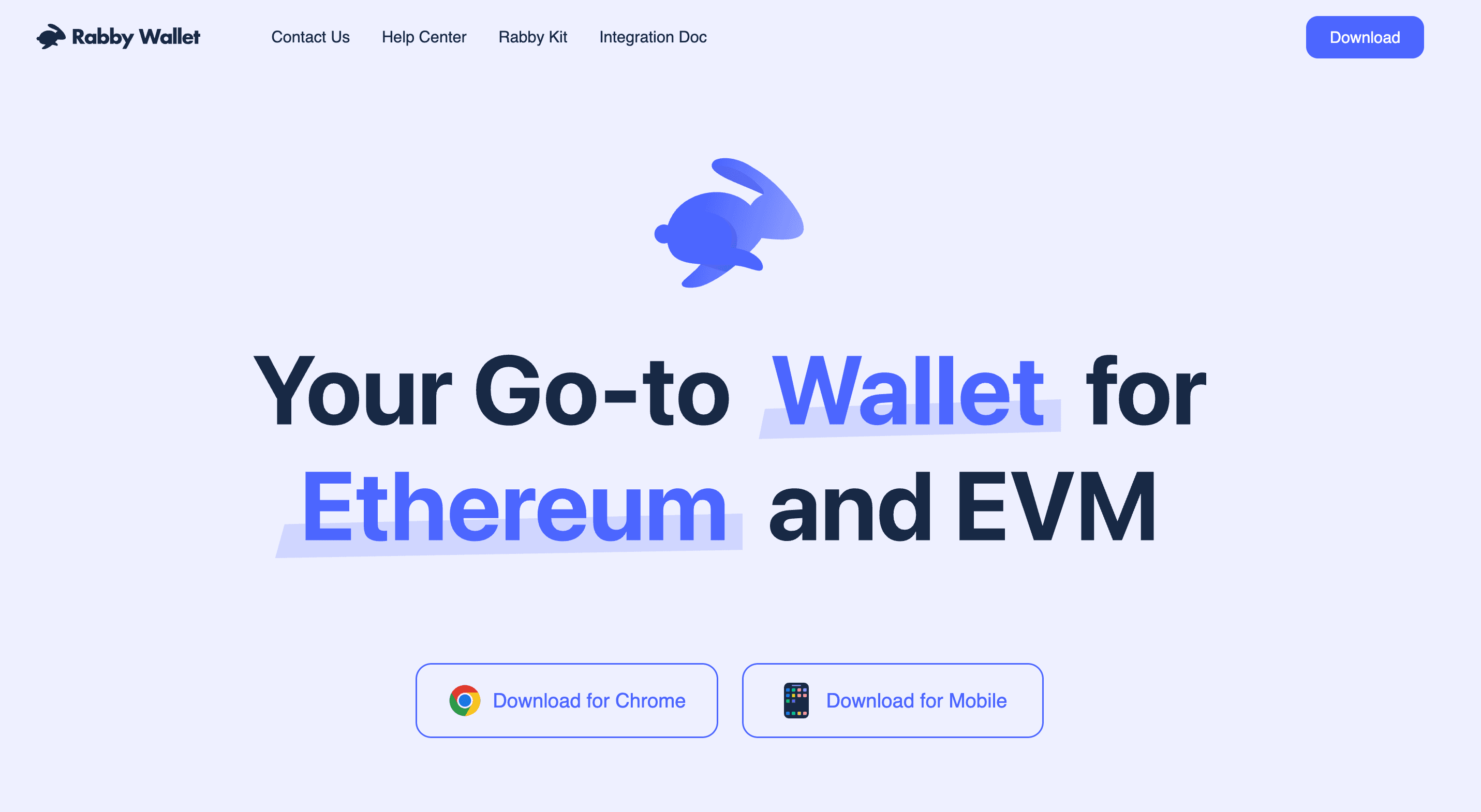
Install Rabby wallet or MetaMask. Fund with $100–200 — enough for gas across 3–4 chains. Go to zns.bio and register a domain on Base, Arbitrum, and one more chain you want to farm. This creates your identity layer before any farming activity.
Day 2 — First farming session (20 minutes)
Go to zns.bio/gm-deploy?tab=7in1 and run the 7-in-1 workflow on each chain you registered a domain on yesterday. Seven transactions per chain. This is your first streak day — the counter starts now.
Day 3 — Build your target list (15 minutes)
Go to zns.bio/airdrops and identify 5 projects to farm this month. Filter by funding raised ($10M+) and "No Token Yet" status. These are your primary targets.
Day 4–7 — Add DeFi yield layer (45 minutes total)
Bridge $50–100 to Base and Arbitrum. Deposit a portion into Aave on Arbitrum for passive yield. Make your first protocol interactions on each target chain. Continue the daily 7-in-1 session — each day adds to your streak.
After week one:
The system runs on 5 minutes per day. The first week requires the most setup. Every week after that is maintenance. The compounding happens in the background.
Find your name across 90+ chains — no renewals, full profile.
Register your Web3 domain and build your onchain identity.