analysisCrypto Income
How to Make Money With Crypto in 2026: Airdrops, DeFi, and On-Chain Activity
9m read·Mar 10
Trezor invented the hardware wallet in 2014. In 2025 they released the Safe 7 — the first hardware wallet with post-quantum cryptography, a fully auditable secure element you can inspect yourself, and wireless charging. Here's everything that changed, what it means for your security, and whether it's worth the upgrade.
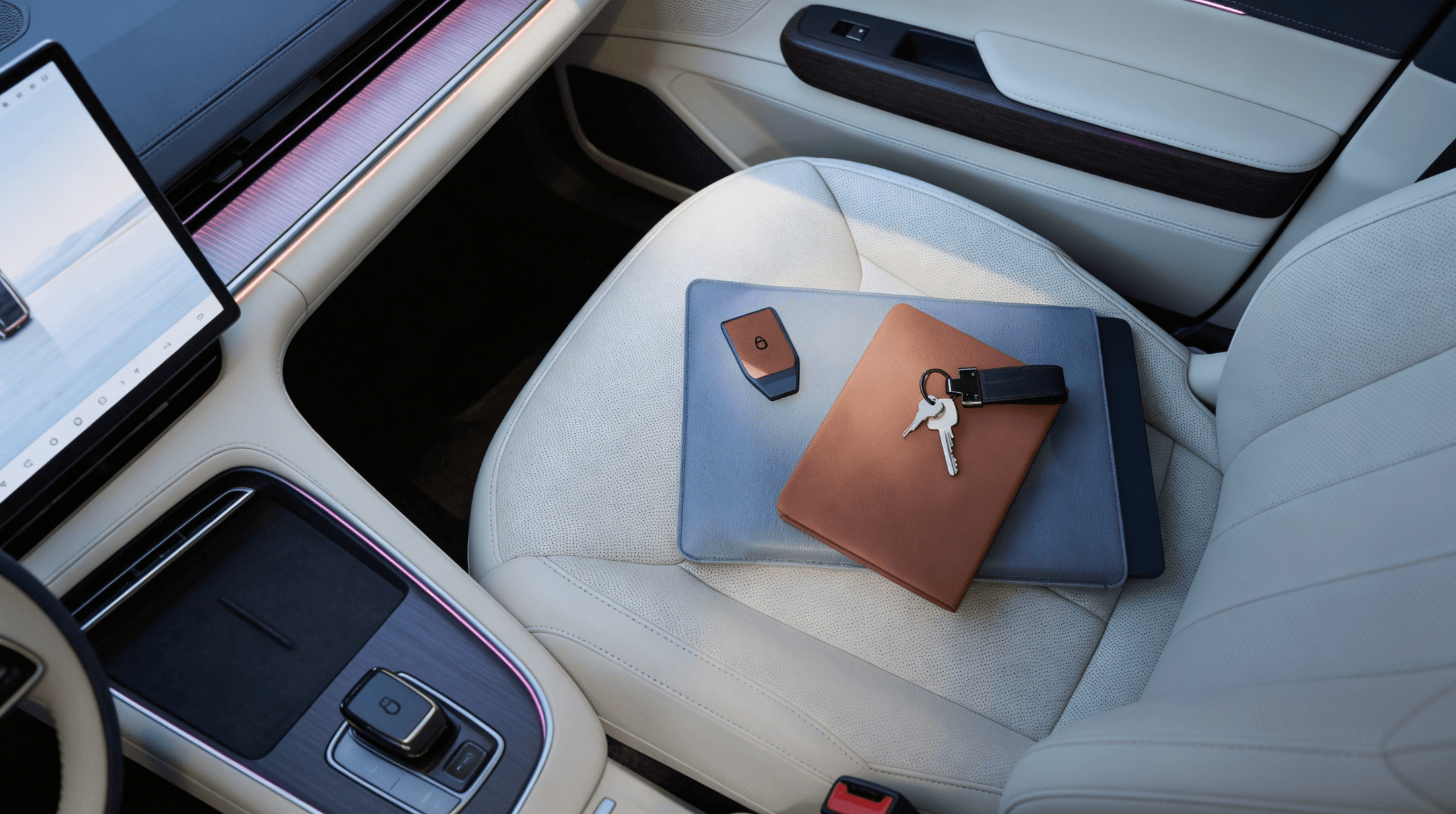
Trezor didn't just make a good hardware wallet. They invented the category. SatoshiLabs released the first Trezor in 2014 — the world's first commercial hardware wallet, two years before Ledger shipped its first device. The company's name comes from the Czech word for "vault." It has shipped millions of devices since, and there is no confirmed case of a Trezor device ever being remotely compromised.
That track record matters more than any spec sheet. Hardware wallet security is fundamentally about trust: do the physical and software design actually do what the manufacturer claims? Trezor's approach to this question has always been distinct: make everything auditable. Open-source firmware, no closed NDAs with chip manufacturers, public security research welcomed rather than suppressed.
The Trezor Safe 7, announced at a Prague conference on October 22, 2025 and shipping from November 24, 2025, extends that philosophy further than any previous model — into quantum computing resistance, transparent chip design, and wireless connectivity that doesn't compromise the core security model.
"It's not a question of if, but when," said Tomáš Sušanka, Trezor's CTO at the Safe 7 announcement. "That's why we built a quantum-ready bootloader into Safe 7. When the time comes, your device can be safely updated, even in a future where quantum computers pose a threat."
The Safe 7 introduces three genuinely new things to the hardware wallet category — not incremental upgrades, but architectural changes that address problems the industry has lived with for over a decade.
Problem 1: Secure element chips are black boxes
Every hardware wallet uses a secure element chip — a dedicated processor that generates and stores private keys in physical isolation from the rest of the device. The problem: these chips have always been manufactured under NDAs. The chip's internal design is proprietary. Users and security researchers cannot verify that the chip does exactly what it claims. They have to trust the manufacturer.
Problem 2: Today's encryption won't survive quantum computing
Quantum computers don't currently threaten Bitcoin. But the timeline for when they might is uncertain. Wallets bought today may still be in use in 10–15 years. The firmware that ships on a device today — including how it verifies its own integrity — will matter in a world where quantum computing is more capable.
Problem 3: Hardware wallets have been too inconvenient for daily use
Plugging in a USB device, navigating a small screen with physical buttons, connecting to a desktop app — the friction has kept hardware wallets as a "savings account" rather than a practical daily signing tool. For active crypto users who need to approve transactions quickly across multiple platforms, this friction leads to keeping too much in hot wallets.
The Safe 7 addresses all three.
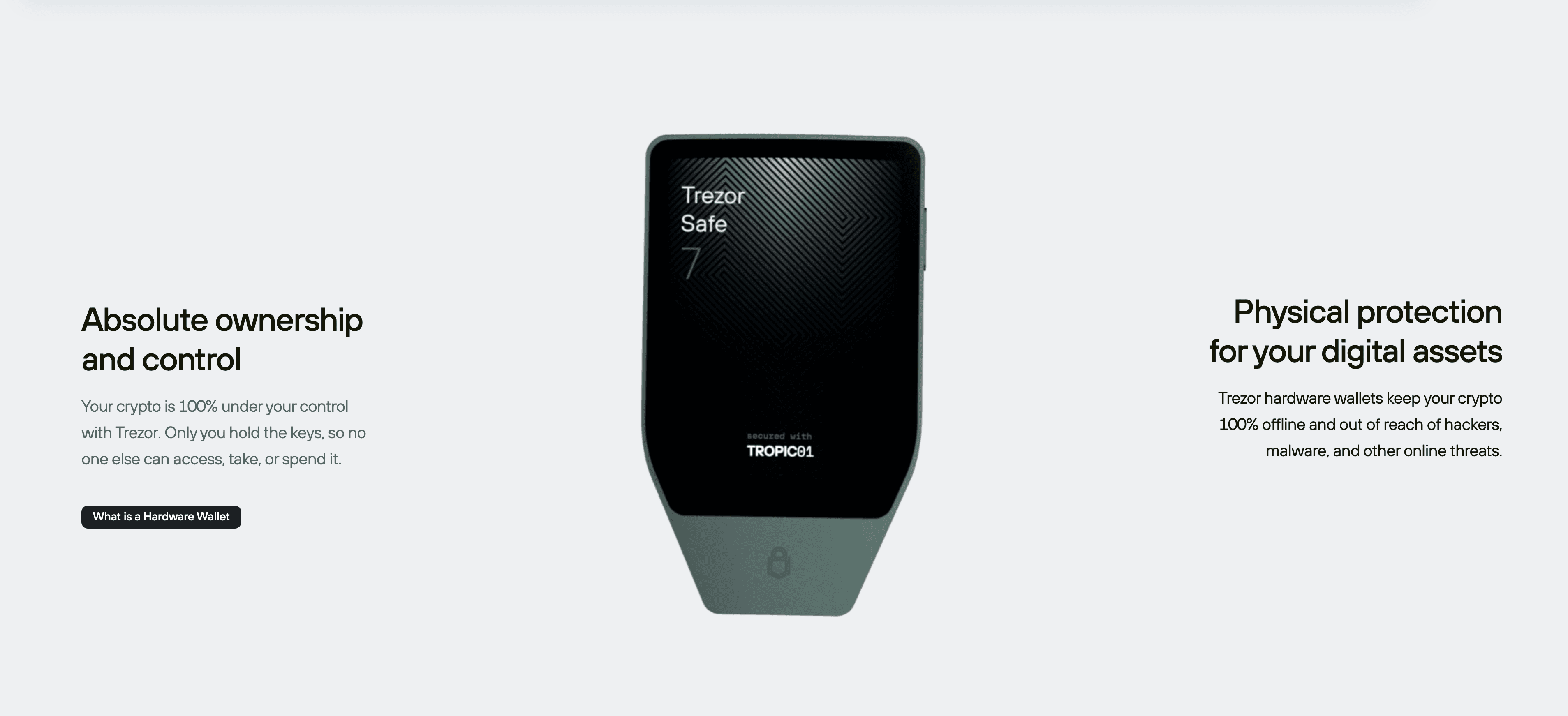
The headline security feature of the Safe 7 is TROPIC01 — a secure element chip developed by Tropic Square, a company within the SatoshiLabs group. TROPIC01 is the world's first fully auditable secure element: its design, architecture, and implementation are publicly available for inspection by anyone.
This is not a minor detail. Every other hardware wallet on the market uses a secure element whose internals are hidden behind NDAs. You are trusting the chip manufacturer's word that the chip behaves as described. With TROPIC01, you don't have to trust. The design can be verified independently by security researchers, by developers, by anyone with the technical capability to evaluate it.
Trezor has operated this way with its firmware since the beginning. The Safe 7 extends that principle to the hardware itself — the most fundamental layer of the security stack.
The Safe 7 doesn't rely on TROPIC01 alone. It pairs TROPIC01 with a secondary NDA-free EAL6+ certified secure element — creating a dual-chip architecture that provides layered protection against both physical and software attacks.
The two tamper sensors operate independently. Each sensor is responsible for shutting down one chip if a physical attack is detected. Shutting down either chip stops the entire attack. For an attacker to compromise the private keys stored on the Safe 7, they would need to simultaneously compromise both secure element chips plus the main processor — without triggering either independent tamper sensor.
No publicly known attack vector achieves this. The dual-element design represents a meaningful step beyond the single secure element architecture used in every other consumer hardware wallet.
The Safe 7 is the first hardware wallet with a quantum-ready bootloader. What this means precisely:
The bootloader — the software that runs first when the device starts and verifies that the firmware hasn't been tampered with — is built to support post-quantum cryptographic algorithms when they become necessary.
Current cryptographic standards are not broken by quantum computers today. But the cryptographic primitives that secure today's firmware verification processes (and eventually blockchain addresses themselves) will need to transition when sufficiently powerful quantum computers exist. The Safe 7's architecture is designed to support that transition through firmware updates, without requiring users to buy a new device.
Trezor is careful to frame this accurately: the Safe 7 does not make Bitcoin quantum-safe — that requires changes to Bitcoin's protocol. What it does is ensure the device itself can be safely updated to use quantum-resistant algorithms when blockchains adopt them. The wallet won't be the weak link.
Hardware is only half the picture. Trezor Suite — the software that manages everything on Safe 7, available across desktop, mobile, and tablet — received major updates in early 2026:
Avalanche C-Chain support — full support for managing AVAX and Avalanche ecosystem tokens directly in Trezor Suite. One of the most requested additions from the community.
Cardano staking dashboard — a dedicated, view-only ADA staking dashboard with the ability to update delegation preferences directly within the interface. Cardano tokens now visible in wallet.
DEX highlighting — decentralized exchanges now highlighted at the top of the swap comparison page, making non-custodial trading options more accessible.
Stellar network tokens — added the ability to manage and transact with Stellar network tokens directly.
Fiat values during trading — fiat values now displayed during all trading flows for clearer transaction insights.
Electrum server connection — added ability to connect to a custom Electrum server for Bitcoin, giving privacy-conscious users full control over transaction broadcasting without using Trezor's backend.
Redesigned transaction list — clearer, more intuitive transaction history view across all accounts.
Trezor Suite 26.3.1 is the current release. Available on iOS, Android, Windows, Mac, and Linux.

The physical device received the most significant design upgrade in Trezor's history.
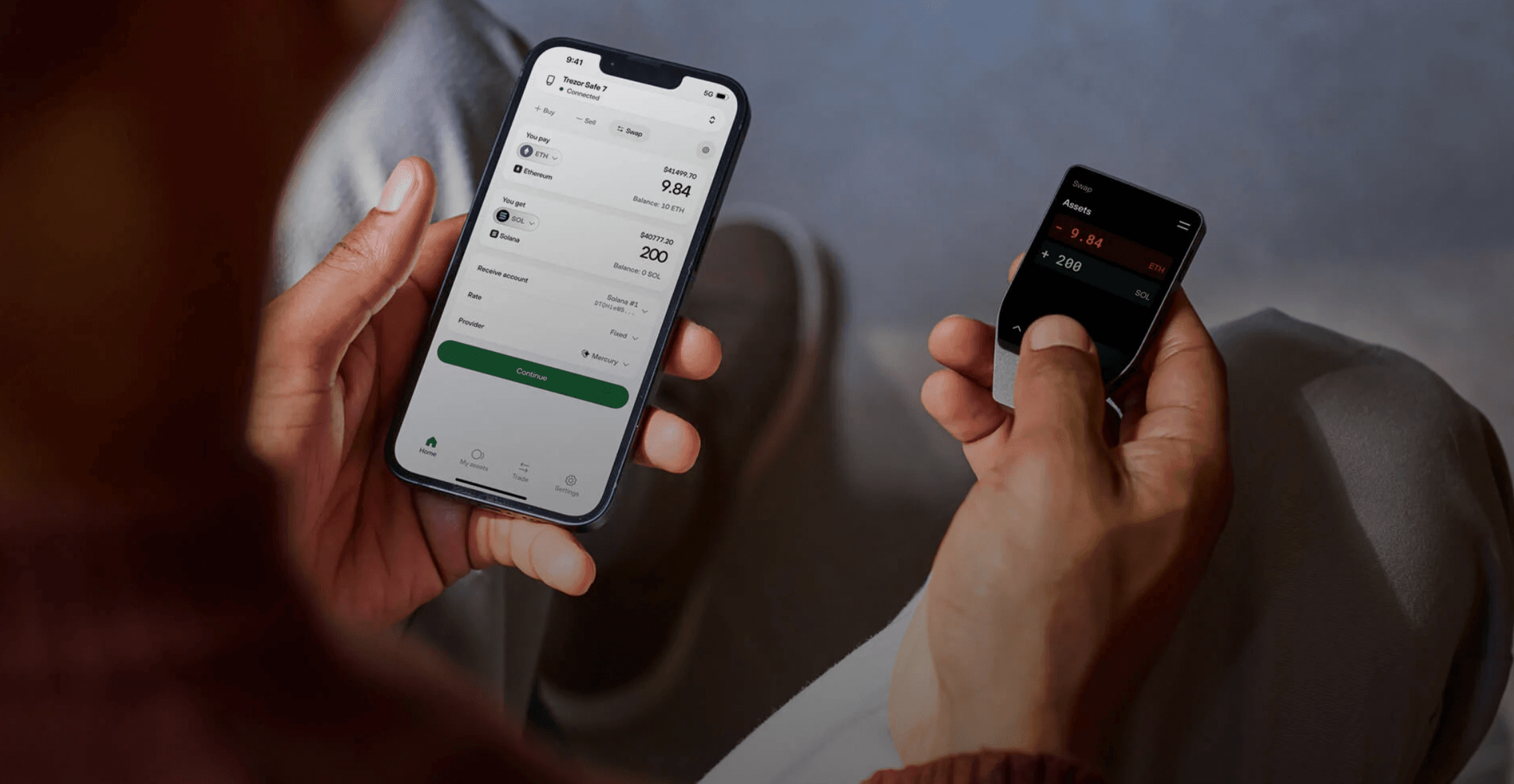
2.5-inch color touchscreen with Gorilla Glass 3 — a 62% increase in screen size over the Safe 5. The larger display isn't just comfort: bigger screens reduce the risk of transaction confirmation errors. When a wallet shows a full address, amount, and destination on a readable screen rather than truncated text on a small display, users are more likely to actually verify what they're signing.
Bluetooth Low Energy (BLE) with open-source encryption — the Safe 7 supports wireless connectivity with an important design decision: Bluetooth functionality is physically separated from the secure element chips. Wireless connectivity cannot access the private keys. Additionally, Trezor introduced the Trezor Host Protocol — an open-source communication layer that keeps all Bluetooth connections authenticated and encrypted. Bluetooth can also be disabled entirely through an on-device settings menu for users who prefer cable-only operation.
Qi2 wireless charging — the Safe 7 charges wirelessly via Qi2-compatible chargers. No cable required for charging.
LiFePO4 battery — the internal battery uses lithium iron phosphate chemistry, rated for four times the charging cycles of standard lithium batteries. It also retains charge after extended periods of non-use — relevant for a device that may sit in a drawer for months between uses.
IP54 rating — dust and splash resistant. Not waterproof, but meaningfully more durable than previous Trezor models.
Anodized aluminum unibody — available in Charcoal Black and a Bitcoin-only edition. Full metal construction significantly increases physical durability over plastic-bodied wallets.
FIDO2 / U2F support — the Safe 7 can be used as a hardware two-factor authentication device for any service that supports FIDO2 or U2F protocols. This extends the device's utility beyond crypto storage into broader account security.
| Model | Price | Key Feature | Best For |
|---|---|---|---|
| Trezor Safe 7 | $249 | Dual secure elements, quantum-ready, wireless | Maximum security + modern UX |
| Trezor Safe 5 | $129 | Haptic touchscreen, EAL6+, open-source | Best value, strong security |
| Trezor Safe 3 | $79 | Entry-level Safe series, EAL6+ | Budget hardware wallet |
The Safe 5 at $129 remains the best value entry point for users who want Trezor's open-source security model without the premium features of the Safe 7. The Safe 7's additional cost buys you the TROPIC01 chip, dual secure elements, Bluetooth, wireless charging, and the quantum-ready architecture.
Hardware wallets like Trezor protect what you own. But in 2026, what your wallet has done matters as much as what it holds. Protocols tracking early users for airdrop distributions look at wallet history — which networks you've been active on, what types of transactions you've made, how consistently you've shown up.
Registering a Web3 domain through a multichain identity platform ties your wallet address to a consistent, human-readable identity across 90+ networks. It creates an on-chain credential that persists independently of any single protocol. Your Trezor secures the keys. Your on-chain activity — built through daily interactions across target networks — builds the profile.
For active Web3 users, the combination of cold storage security (Trezor) and daily on-chain activity (built through tools like the 7-in-1 workflow at zns.bio/gm-deploy?tab=7in1) represents the complete setup: your long-term holdings are protected by the most secure open-source hardware wallet available, and your active farming wallet builds the transaction history that qualifies you for the next wave of distributions.
Trezor built the vault. What you put in it — and what your active wallets are doing in the meantime — is up to you.
Find your name across 90+ chains — no renewals, full profile.
Register your Web3 domain and build your onchain identity.